
Through traditional banking, customers have become used to password resets, access to support staff, and mechanisms for contesting unauthorized payments. The assumptions underlying cryptocurrency are not the same. The loss of access to a self-custody wallet can have lasting consequences for access to its assets. Sending funds to an incorrect address may leave no practical way to recover them.
Discussion of cryptocurrency valuations often overshadows these practical differences. For beginners, however, these distinctions are fundamental to understanding the subject.
The starting point for digital asset education should be responsible use, not profitability.
Begin With How Digital Assets Move
Anyone looking to learn cryptocurrency will benefit from understanding what happens when digital assets move between addresses.
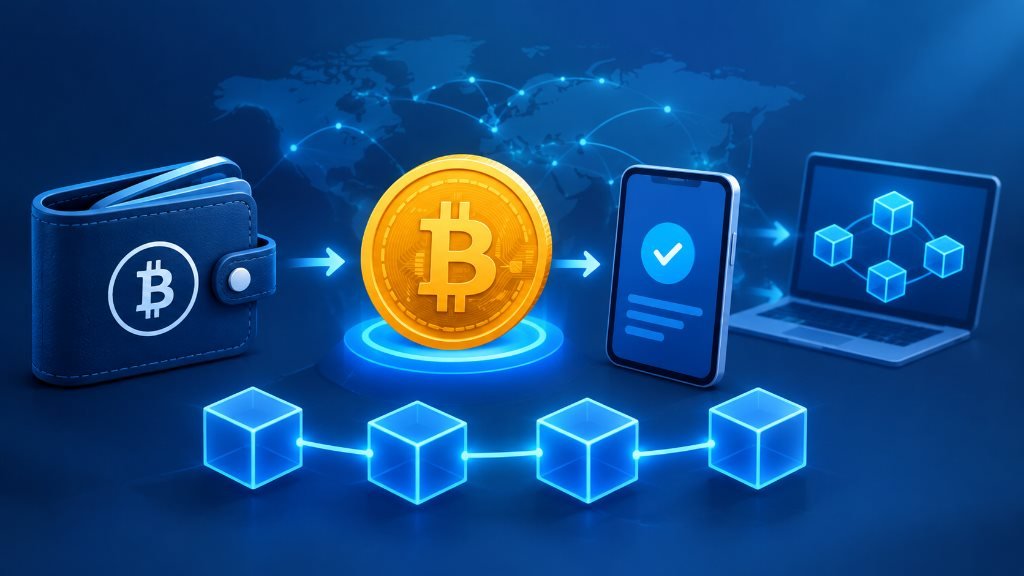
A distributed network of computers maintains a common record of transactions through a blockchain. The network’s design determines the rules participants use to validate transactions and reach agreement on the record’s state. It is misleading to think of a cryptocurrency wallet as a physical container for digital coins. Its function is to manage cryptographic keys used to approve transfers and other transactions involving blockchain assets.
A grounding in these blockchain fundamentals helps learners approach unfamiliar terminology with greater understanding. Network fees, transaction confirmations, public addresses, and private keys begin to make sense when viewed as related parts of one system rather than isolated technical terms. The need to protect wallet credentials becomes easier to appreciate in this context.
The Responsibilities Behind Asset Ownership
Buying digital assets on an exchange does not automatically mean the purchaser controls the private keys associated with the assets. With custodial services, the provider typically manages those keys. With self-custody, key management becomes the individual’s responsibility. Neither arrangement eliminates risk; it changes who bears the responsibility.
Using a custodial platform means depending on a service provider. Managing assets through self-custody involves careful attention to recovery information, secure devices, and transaction authorization. A compromised recovery phrase can undermine even an otherwise secure wallet.
These distinctions become particularly relevant when someone begins to explore decentralized finance, or DeFi.
Through smart contracts, DeFi applications can support activities involving digital asset exchange, lending, and borrowing. Potential risks range from software vulnerabilities and liquidity difficulties to harmful user interfaces and unexpected collateral value changes.
Layer-2 networks introduce another dimension by processing activity outside a blockchain’s main execution layer while relying on it to different extents for settlement or security. Users should recognize that costs, withdrawal mechanisms, and security assumptions vary from one implementation to another.
Study Market Mechanics Before Price Predictions
A useful crypto trading course should explain market mechanics rather than promise profitable outcomes. For instance, learning how market and limit orders differ can clarify why a transaction may execute at a price other than the initial displayed price. Factors affecting execution include liquidity, trading volume, the spread between bid and ask prices, and slippage.
An educational bitcoin trading guide should likewise cover price volatility, exchange fees, and leverage-related risks. Past price behavior is not a reliable way to determine what prices will do next.
This practical approach to cryptocurrency education is reflected in the resources offered by The Coin Course. Its free, independent learning resources include tutorials that proceed step by step, structured courses with quizzes, and daily cryptocurrency news. The resources prioritize understanding the technology and identifying scams and risks over recommending particular assets.
A Better Measure of Progress
Consider whether a learner can explain the consequences of their own actions instead of simply counting the tokens they recognize.
Can they distinguish between public addresses and private keys? Are they aware of what a decentralized application is requesting permission to do? Could they explain why guaranteed returns promised in an unsolicited message are a reason for skepticism?
These questions reveal more about practical cryptocurrency literacy than knowledge of market vocabulary by itself. The digital asset ecosystem will continue to introduce new products, networks, and financial mechanisms. Education provides a basis for critical examination of these developments without depending on marketing assertions or enthusiasm on social media.
Understanding a technology’s functions, limitations, and the responsibilities involved in using it represents a valuable achievement in its own right.