Surface finishing is not a labor-intensive procedure anymore, but a precision-driven one. In the current manufacturing environment, coating quality directly influences the durability, corrosion resistance as well as overall perception of the product. In order to meet the demands of customers who demand flawless finishes and increasing global standards, a lot of companies have opted to use paint robots.
Modern paint robots offer organized motion and programmable precision to the applications that previously relied on operator skill. By automating spray paths, speed, and angle of application manufacturers can eliminate a lot of the flaws that can create uneven film building or overuse of materials. This leads to an application process that is consistent and supports First Time Quality.
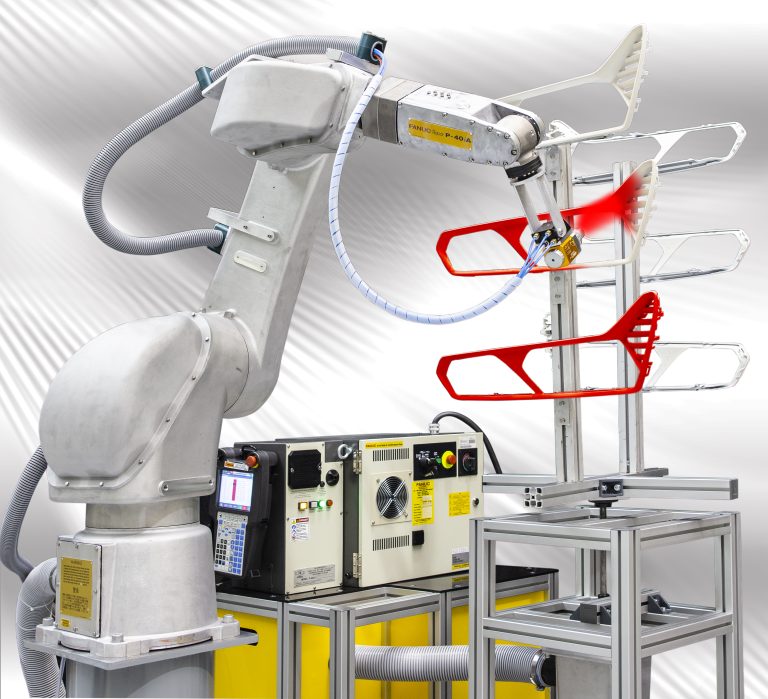
Image credit: automatedsolutions.com.au
Consistency, efficiency, and measurable improvements
The human factor or small differences in technique can lead to variations in the thickness and coverage of manual paint. Paint robots eliminate this variance by using the exact motion patterns for each production cycle. This level of repetition ensures an even surface finish and optimal material distribution across every component.
The efficiency of transfer from advanced paint systems that use robotics is enhanced. Overspray can be reduced by maintaining a certain distance between the applicator, and the component. This permits more coating to get on the surface of the intended. The decrease in material waste results in cost savings. Decreased volatile organic compound emissions also aid in the environment.
The integration of fluid handling into paint robotics ensures precision in mixing ratios for multi-component coats. It eliminates inconsistencies that could weaken the integrity of the finished. The combination of stable flow control and programmable parameters allows manufacturers to fine-tune atomisation and spray patterns in real time without interrupting production.
Safety and Productivity
The adoption of a robot painter can bring a significant benefit in terms the increased availability. Contrary to manual procedures, robotic paint cells are able to operate indefinitely with only a few interruptions. Once programmed, they will maintain constant throughput without breaks or constant supervision.
Safety considerations are important in facilities that handle solvent-based coatings and two-component paints. Paint atomised can cause hazardous environments, especially when working with substances that are flammable, or reactant. Modern paint robots are designed for safe operation even in the most challenging conditions. They can reduce the exposure of personnel to hazardous chemicals and boost safety in workplaces.
The technology of conveyor tracking improves productivity further through the robotic painting of components when they are in motion. This increases the effectiveness of the working area and helps keep the production lines in good working order.
Australian Automation Expertise Supporting Industry
Access to automation partners with experience is crucial for businesses that are looking to modernize their finishing processes. In Australia, Automated Solutions has gained a reputation of the provision of high-end robotic integration services. With extensive knowledge in automation engineering, the team works as certified FANUC robot integrators, helping businesses implement tailored robotic paint solutions that align with their operational goals.
Combining technical knowledge with actual industry experience, Automated Solutions assists manufacturers in evaluating their existing processes and designing optimised robotic paint cells. By combining collaborative planning with simulations and system integration, companies are able to better comprehend the expected performance improvements prior to implementing.
Adopting paint robotics is not only about automation. It is about measurable improvements in quality performance, efficiency, as well as safety. A well-engineered paint robotics system transforms the process of finishing surfaces into a controlled efficient, repeatable, and economical process. Manufacturers can increase their competitiveness by partnering with experts in automation who have the experience to help to achieve sustainable success in the market that is getting more demanding.